
Confidential Human Factors

Incident Reporting Programme

MFB 83

Maritime’s ‘Inconvenient Truth’

In recent months, we have received a number of reports in which fatigue was a factor, and we have amalgamated them into report M2734. This may be one of the most important documents we have ever published, as the sheer volume of reports we are receiving suggests fatigue may be widespread. In some cases, fatigue was experienced even though the vessel’s working routines complied with hours of work and rest legislation. We make the point that fatigue cannot be managed through paperwork alone, and we would hope that caring companies will have procedures in place so that individuals are encouraged to report when they feel fatigued and are permitted to take themselves away from their duties until they recover. If you have been supported by your company, or consider your concerns have been ignored, please do let us know.

Pilot ladders also feature in two reports – one in which the crew did not know the difference between pilot ladders and embarkation ladders, and the other in which the pilot ladder appears not to have been made fast. This is basic seamanship, but the number of reports we receive suggests it may be sadly absent on many vessels. To our seafaring readers, we urge you to take a critical look at the pilot ladder arrangements on your vessel to ensure you are not part of the problem.

We also consider a report of welding in the forepeak of a tanker, where no precautions at all seem to have been taken. The presence of a superintendent may have discouraged the crew from intervening, but as we remind you, the Master is still legally responsible. Owners and managers should ensure that crew members are empowered to speak up, even when head office personnel are involved.

Finally, we learn about a very lucky officer who was struck when the stored energy in a towing line was released, and we conclude with a nasty case of infestation where the problem was allowed to fester for several weeks and, to make matters worse, the potable water on board was probably undrinkable.

Until next time, be careful out there!

  • M2719

    Concerns over the lack of a pilot ladder on board
    Concerns over the lack of a pilot ladder on board

    Significant concerns were raised and reported when a pilot authority contacted CHIRP to report that the ladder supplied to a vessel was an embarkation ladder, not a pilot ladder. The pilot refused to board the vessel and requested that the master order a compliant pilot ladder before boarding could take place.

    When questioned about the pilot’s refusal to board, the master stated that the embarkation and pilot ladders were the same!
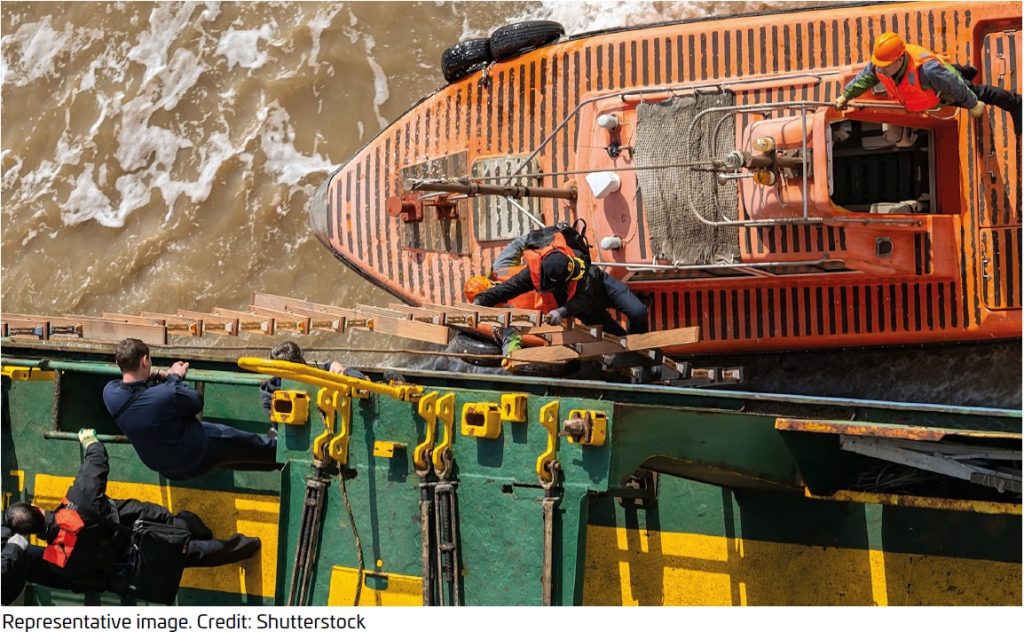
     

    The liferaft embarkation ladder is an important item of emergency equipment intended to assist personnel in boarding a lifeboat or liferaft during an abandonment. It is not designed or approved for pilot transfer or for contractors to embark.

    CHIRP is concerned that this situation appears to have gone unchecked for an extended period. It is difficult to understand how the continued use of the incorrect ladder for pilot boarding became accepted practice. This suggests that nobody challenged the status quo or questioned whether the arrangement complied with requirements.

    There was a clear misunderstanding on board about the difference between an embarkation ladder and a pilot ladder. Such a basic error indicates a lack of equipment awareness and raises broader concerns about whether other safety-critical equipment or procedures may also have been misunderstood or misapplied.

    The vessel was not new and had reportedly operated in Northwest Europe for some time. This indicates multiple missed opportunities to identify and correct the deficiency. The failure was missed by the ship’s crew and onboard management, company oversight ashore, and external assurance bodies, including the flag state, port state control, and class. This was therefore not an isolated oversight but a systemic failure.

    The vessel’s annual cargo ship safety equipment certification process should have confirmed that a compliant pilot ladder, together with a spare, was carried on board. In addition, SOLAS Chapter V, Regulation 23 specifically requires pilot ladders.

    Safety standards improve outcomes only when they are clearly understood and consistently applied. If language, training, or poorly written procedures contributed to this confusion, these issues must be addressed. Instructions for critical equipment need to be practical, unambiguous, and regularly verified in use.

    Credit is due to the pilot authority for halting the operation and refusing to board. Their intervention prevented an unsafe transfer and demonstrates the importance of speaking up and taking decisive action when standards are not met.

    Factors relating to this incident

    Capability – The master’s assertion that an embarkation ladder and a pilot ladder are equivalent indicates a gap in understanding of regulatory and safety-critical distinctions. This aligns with a breakdown in technical knowledge required for safe pilot transfer operations.

    Complacency – The acceptance or normalisation of a non-compliant ladder suggests the risk may have been underestimated, possibly due to routine exposure without prior negative outcomes.

    Alerting – Appears in a limited sense within the shipboard context. While the pilot demonstrated appropriate assertiveness, there is no indication that crew members challenged the arrangement internally, suggesting a possible reluctance to question decisions.

    Communication – The mismatch between the pilot’s expectations and the vessel’s preparation includes both procedural communication (requirements not clearly understood or conveyed) and operational communication between the ship and the pilot authority.

    Teamwork – A lack of teamwork may also be inferred, particularly if the bridge or deck crew did not engage collectively in verifying compliance or supporting safe pilot transfer preparations.

    “A routine task became unsafe not through a single failure, but through a shared misunderstanding of what ‘correct’ looked like.”

    Key takeaways

    Regulators“Standards only improve safety when they are consistently understood, not just published.” This incident highlights the importance of ensuring that regulatory requirements, especially those concerning pilot transfer arrangements, are not only clearly outlined but also effectively understood and implemented in practice. Regulators might also consider whether guidance documents adequately distinguish between similar equipment types and whether additional focus is needed during inspections, audits, or awareness campaigns to address common misconceptions. The event underlines the value of strengthening practical understanding, not merely procedural existence.

    Managers (Operators / Companies) – “If crews are improvising compliance, the system has already drifted from safety.” Managers should consider whether pilot transfer procedures are actively reinforced and whether crews are routinely exposed to the correct standards through drills, inspections, and supervision. There may also be a need to examine whether “work as done” has diverged from “work as intended,” particularly if non-compliant substitutions are being accepted in practice.

    Seafarers “When something ‘looks about right,’ that is the moment to check more closely.” For crew members, the incident underlines the importance of recognising that seemingly similar equipment can have very different safety implications. Maintaining an accurate understanding of requirements, particularly for pilot transfer arrangements, is essential. The situation also highlights the value of speaking up and cross-checking, especially when there is uncertainty about compliance. A questioning mindset and willingness to verify assumptions remain key contributors to safe operations.

  • M2734

    Fatigue: safe crewing on paper, risk in reality
    Fatigue: safe crewing on paper, risk in reality

    CHIRP received a fatigue-related report highlighting the ongoing impact of tiredness across the maritime sector. Drawing on the reporter’s narrative and other fatigue submissions, CHIRP presents this combined safety perspective to illustrate a broader systemic safety concern. The consistency of reports received by CHIRP suggests these are not isolated concerns, but recurring indicators of wider industry pressure. This report includes the actual SHIELD taxonomy (Safety Human Incident and Error Learning Database) to provide some more context

    Fatigue remains one of the most persistent and under-reported risks in maritime operations. It rarely stems from a single long shift or an isolated, difficult week. More often, it develops gradually through sustained exposure to demanding schedules, insufficient recovery time, staffing pressures, and a culture in which ‘coping’ becomes the norm.

    CHIRP continues to hear from personnel working patterns that involve repeated night shifts, disrupted sleep, elevated stress, and declining alertness. Although minimum hours of rest may be recorded as compliant, genuine recovery is frequently not achieved in practice.

    This distinction matters: regulatory compliance does not always mean a person is fit for safe duty.

    Many safe crewing models were developed using assumptions that no longer reflect modern ship operations. Crew members are now exposed to increased mental and emotional load, including constant connectivity with shore management, a 24-hour information environment, and rising administrative demands. Port turnarounds are faster, commercial schedules are tighter, and additional tasks are frequently imposed with little or no increase in the number of people or time available.

    At the same time, recruitment and retention challenges in some sectors have reduced experience levels on board, placing further pressure on those who remain and increasing fatigue exposure. Uncertainty about timely relief can add further strain. Several reporters described cumulative fatigue after prolonged night work, with recovery periods that did not fully restore normal sleep patterns.

    These reports are particularly concerning because they often involve experienced personnel who recognise the hazards but still struggle to manage fatigue exposure. Microsleeps, lapses in concentration, and fatigue-related near misses during routine tasks were reported in several submissions. Such events should not be dismissed as isolated lapses or individual failings; they are indicators that safety margins may already be eroding.

    Machinery alarms, maintenance defects, or equipment unreliability are recognised triggers for intervention, and the same principle should apply to degraded human performance. Systems are taken offline when machinery is unsafe; organisations should similarly act when personnel are no longer sufficiently rested to perform their duties safely.

    CHIRP has previously highlighted the tension between operational safety and commercial efficiency. In some cases, crewing levels appear to be based on minimum legal thresholds or cost benchmarks rather than the workload required for safe operation. Where planning depends on people continually “pushing through”, the system may already be operating beyond safe limits.

    Research initiatives such as Project MARTHA and the Horizon programme have contributed to an improved understanding of fatigue, human performance limits, and workload. Their findings reinforce a consistent message: fatigue cannot be effectively managed through paperwork alone.

    Fatigue is not confined to a particular department, rank, or role. Similar patterns are evident across bridge, engine room, and other safety-critical functions, both at sea and ashore. Recognition, reporting, and intervention need to be applied consistently, regardless of experience level or position. Treating fatigue as a shared operational hazard rather than an individual weakness is essential for maintaining effective safety margins.

    Effective fatigue management requires looking beyond minimum rest requirements to understand how work is actually experienced (‘work as done’). Early indicators include repeated near misses, lapses in attention, rising error rates, or informal concerns raised by personnel. When such indicators are present, fatigue should be treated as a safety risk requiring active management, analogous to technical defects or degraded equipment. Adjusting workload, revisiting rosters, reviewing task allocation, or delaying non-essential activity may be necessary to protect safety margins. Where these signs are present, immediate mitigations are required to prevent further reduction in safety margins.

    Fatigue rarely develops suddenly. It accumulates over time and can become normalised within an organisation, making the risk harder to recognise.

    This report highlights the gap between recorded compliance and genuine recovery. A logged rest period does not guarantee restorative sleep. Noise, stress, disrupted circadian rhythms, repeated night work, and accumulated sleep debt all reduce the quality of recovery.

    The report also reinforces that fatigue affects everyone, including experienced personnel. Competence and professionalism are important safety defences, but they cannot overcome biological limits.

    Near misses involving lapses in concentration or microsleeps are early warning signs that safety margins may already be narrowing, providing an opportunity to intervene before a more serious event occurs.

    CHIRP has received previous reports linking fatigue to navigation errors, poor decision‑making, ineffective communication, and unsafe shortcuts. These patterns appear consistently across sectors, demonstrating that fatigue remains a widespread systemic hazard.

    Safe crewing levels require regular review. In some cases, minimum crewing may satisfy regulatory requirements but no longer reflect the operational reality onboard, where administrative workload, maintenance demands, commercial pressure, and port turnaround expectations have increased.

    Where systems depend on people continually “pushing through”, warning signs may already be present.

    Human Factors Relevant to this Report

    Fatigue – Cumulative sleep debt, repeated night shifts, and poor recovery reduce alertness, concentration, and decision‑making ability.

    Pressure – Commercial and operational demands may encourage continued operation despite reduced fitness for duty.

    Communication – Concerns were raised without effective resolution. When people believe concerns will not lead to change, reporting may decline and morale will certainly suffer.

    Complacency – Microsleeps, near misses, or fatigue may become normalised if not challenged or addressed.

    Alerting – Individuals may continue working while fatigued rather than removing themselves from duty or escalating concerns. It is vital that crew members remain alert and stop work if they suspect they are fatigued.

    Teamwork – Reduced staffing and fewer experienced personnel increase workload and reduce system resilience. Teamwork is vital in these circumstances.

    Norms – Extended sequences of night work may become culturally accepted even when unsafe. Question this false normality and make the necessary changes to roster patterns to change it.

    SHIELD Taxonomy identified

    Acts What goes wrong – Unintentional lapses in attention, reduced monitoring, delayed reactions, and fatigue‑related errors.

    Preconditions Factors influencing performance – Sleep debt, circadian disruption, stress, poor recovery, high workload, and degraded vigilance.

    Operational Leadership Policies affecting work – Rosters, crewing decisions, task allocation, and day‑to‑day management of fatigue risk.

    Organisational Influences –  Influence of the company/external environment – Staffing models, recruitment pressures, commercial priorities, safety culture, and the effectiveness of fatigue management systems.

    Key Takeaways

    Minimum crewing does not always mean optimum crewing. Compliance on paper does not ensure fatigue risk is controlled in practice.

    Regulators – Documented compliance should be assessed against actual workload, administrative burden, and operational tempo to determine whether fatigue controls are effective.

     Operators / Managers – Systems that rely on tired people coping are unsafe. Crewing levels, schedules, and workloads must reflect operational reality. Fatigue indicators, like equipment alarms, should prompt management intervention.

    Seafarers / Contractors – Professionalism is an important safety barrier, but it should not be the only one. Remain alert to early warning signs such as reduced concentration, irritability, or repeated mistakes. Raise concerns early, support colleagues, and cross‑check critical tasks when fatigue risk is elevated.

  • M2755

    Human Factors: from the bridge to the pilot ladder
    Human Factors: from the bridge to the pilot ladder

    A pilot told us:

    The captain left the bridge around 15 minutes after we left the dock, leaving the chief mate on the bridge with me. The captain returned about 15minutes prior to disembarkation.

    During the Pilot Master exchange (PMX), I asked the captain what his plan was as there was a “strong wind forecast” due later in the day with waves of 2.5-3.5m expected…” big seas for a small ship with only 3.0m draft” and advised that seeking shelter would be a sensible decision. He intended to proceed to his next port regardless. It was only when he returned to the bridge before I was to disembark that we had a further conversation about the weather, and only after some discussion did he change his mind and decide to seek shelter for a couple of hours.

    When I arrived at the pilot ladder to disembark, it was clear the ladder had not been checked by an officer (since the officer had been with me the entire time), and he hung back as I approached. Immediately, I noticed the lashings, which were roughly 6-8mm polyrope secured with what can only be described as a “granny knot”. I told the AB that these lashings needed to be replaced with a suitable type, and he replied “yes” but then just stood looking at me, perplexed. I also noticed that the ladder ends were not secured, and I highlighted this to the AB for rectification. I must have told him and the chief mate four or more times that the lashings needed to be changed immediately, that the ladder’s ends needed to be secured, and that I would not use the ladder until it was properly secured. At this point, I returned to the bridge, asked the pilot launch to delay coming alongside because the ladder was not adequately secured, and informed the captain that this issue needed to be rectified immediately before I disembarked and that I would be reporting the matter. The master did not have much to say at all.

    Once the crew confirmed that the ladder was “properly secured”, I returned to the ladder, and the chief mate apologised. I told the chief mate that, although I appreciated the apology, this situation was totally unacceptable and that an apology would be of no comfort should I or anyone else end up in the water and be unable to return home.

    I again checked the ladder, and with the defects having been resolved, I disembarked without incident.

    CHIRP finds that this report shows unsafe practices in both bridge management and pilot transfer, with human factors playing an important role. The situation was not caused by a single mistake, but by a pattern of poor communication, acceptance of poor practices, and a lack of proper supervision at key points.

    Pilot transfer arrangements must be actively checked and supervised. The officer responsible is expected not just to arrange the task but also to ensure it is properly done and safe. Relying on others without checking is not acceptable when the risk is high.

    The report also shows how operational decisions can be influenced by pressure to continue despite adverse weather. Clear, practical guidance that is owned and used by crews can help support safer decisions and give masters confidence to delay or seek shelter when conditions are marginal.

    There is also concern that routine checks were not properly carried out. While the issues were eventually fixed, the main point is that they should have been identified and corrected before the pilot’s involvement. Safety-critical equipment and rigging must be checked properly the first time, not only after a concern is raised.

    Although the situation was corrected, it is not clear that the lessons have been fully taken on board. Good safety practice depends on consistent checking, open challenge, and making sure that “done” always means properly verified.

    CHIRP has contacted the vessel’s management company to highlight concerns around seamanship standards, safety discipline, and communication during this pilot transfer.

    Factors relating to this report

    Communication – issues are evident in both weather decision-making and pilot ladder preparation, with concerns either not shared effectively or not acted upon despite repeated raising.

    Alerting – the crew did not challenge unsafe ladder rigging or escalate concerns prior to the pilot’s intervention.

    Complacency – is suggested by acceptance of substandard pilot ladder arrangements and the initial willingness to proceed into adverse weather without sufficient reassessment.

    Teamwork – The lack of teamwork is evidenced by the absence of cross-checking and shared responsibility, particularly for a safety-critical task such as rigging the pilot ladder, and is reflected in the captain’s limited presence on the bridge during a developing risk situation and in the lack of oversight of critical safety preparations.

    Situational Awareness – is present in both environmental risk perception and the failure to recognise the severity of an improperly secured ladder.

    Local practice – Norms are strongly indicated, with unsafe practices (poor lashings, unsecured ladder ends) appearing routine rather than exceptional.

    Capability –  is suggested by incorrect rigging techniques and inappropriate materials being used.

    Takeaways

    Regulators – Compliance on paper does not guarantee safety in practice. There is a need to ensure that compliance with pilot transfer regulations and procedures is not only documented but consistently verified in practice, particularly where routine tasks may drift from standards over time. Greater emphasis on auditing real-world behaviours, especially around pilot ladder rigging and bridge resource management, would help identify gaps between “work as imagined” and “work as done.” Strengthening oversight of how safety-critical procedures are trained, assessed, and reinforced could address latent cultural issues that allow unsafe norms to persist.

    Managers (Operators / Companies) – What leaders tolerate becomes the standard crews follow. This report highlights the importance of actively reinforcing safety culture onboard, particularly around supervision, communication, and challenge. Bridge leadership behaviours set the tone; an absence of, or limited engagement during key operational phases can weaken standards and reduce crew responsiveness. There is also a need to ensure that crews are both trained and empowered to stop unsafe acts, with clear expectations for verification of critical equipment like pilot ladders. Routine tasks require the same discipline as high-risk operations, as this is where complacency and norm drift often develop.

    Seafarers – If something is unsafe, stopping the job is the safest course of action. The event demonstrates the importance of speaking up, cross-checking, and not accepting “good enough” when safety is involved. Even familiar tasks like rigging a pilot ladder carry significant risk if not completed correctly. Repeated instructions from the pilot were required before action was taken, highlighting the need for clearer communication and immediate response to safety concerns. Every crew member has a role in maintaining standards, and timely intervention can prevent escalation into serious incidents.

  • M2745

    Forepeak tank welding without any safety checks
    Forepeak tank welding without any safety checks

    Welding was being carried out in the forepeak tank while the vessel was loaded with diesel. The work was required to address seawater ingress through a crack in the bulkhead. The incident was reported to CHIRP because the work was unsafe. CHIRP has followed up with both the Flag State and the reporter.

    Two contractors were carrying out the repairs under the supervision of a superintendent on board.

    No permit-to-work or enclosed-space entry procedure was in place. There was no rescue equipment or crew present, and the reporter observed no evidence of gas monitoring.

    It is currently unclear whether Class had issued a schedule of work for the repair. The Flag State investigation team has been notified and asked to liaise with Class for follow-up.

    This report identifies a serious breach of established international requirements for enclosed space entry and hot work. Welding was conducted in a forepeak tank while the vessel was loaded with diesel, without a permit-to-work system, enclosed space entry procedures, or evidence of atmosphere testing or continuous gas monitoring. No rescue equipment, standby personnel, or breathing apparatus were in place.

    These failings contravene guidance from the International Maritime Organisation (MSC.1/Circ.1401 Rev.1) and the mandatory provisions of the International Safety Management Code. Entry into enclosed spaces must be controlled through risk assessment, permit-to-work, verified and continuous atmosphere testing, effective ventilation, and fully prepared rescue arrangements.

    Forepeak and ballast tanks are high-risk enclosed spaces. Alongside flammable or toxic atmospheres, they present a significant and often underestimated risk of oxygen deficiency caused by internal corrosion, an established cause of multiple fatalities. Without proper monitoring, ventilation, and emergency preparedness, the risk of rapid incapacitation and death is high.

    Conducting hot work or entering enclosed spaces without these safeguards represents a fundamental breakdown in risk control. The absence of rescue equipment and immediately available breathing apparatus significantly increases the likelihood of fatal outcomes and may result in enforcement action by Flag State and Port State Control authorities.

    The involvement of contractors and a superintendent does not reduce these obligations. Contractors may be unfamiliar with ship-specific risks, particularly during urgent repairs. The shipowner and Master remain legally responsible for ensuring proper induction, supervision, and full compliance with the vessel’s safety management system. Responsibility for safe operations cannot be delegated.

    This report is a stark reminder that entry into enclosed spaces and hot work require strict adherence to established standards. Permit-to-work systems, continuous hazard monitoring, effective supervision, and verified emergency preparedness are essential to prevent fatalities.

    Factors relating to this report

    This event shows a cluster of high-risk human and organisational behaviours, rather than a single failure.

    Communication – No clear communication regarding the work scope and associated hazards (hot work, diesel enclosed-space tank environment). Possibly, a power gap between office management and the crew prevented people from speaking up.

    Complacency – The work activity was treated as a routine repair, and, due to a lack of effective control measures, it appeared to normalise unsafe practice.

    Capability – Failure to recognise the work as a high-risk work environment and the need for basic safety controls.

    Teamwork – was missing because if the crew had been operating as a team, there would have been a challenge to the work activity

    Capability – Missing from the work were the following: a permit to work, gas-monitoring equipment, rescue equipment, and standby personnel with communications equipment.

    Pressure – Likely urgency due to seawater ingress and the need to maintain operational readiness may have overridden safe decision-making

    Norms (Unsafe Practices Becoming Standard) – Absence of a PTW strongly suggests:  “This is how we normally do it in this company”, so that deviations from standard operating practice have become accepted standards.

    Key Takeaways

    If the permit isn’t in place, we may not yet understand the risks well enough to start.

    Regulators (Flag State / Class) – This case highlights the need to actively verify compliance with fundamental safety controls, including permit-to-work, gas monitoring, and enclosed-space procedures. Greater oversight is needed to ensure that requirements are consistently applied in practice, with clear accountability among the Flag State, Class, and operators. Targeted inspections and follow-up on reported concerns can help close the gap between procedures and on-board reality.

    Managers / Operators – This incident reflects a failure to enforce core safety management system barriers. Managers must ensure that critical controls are treated as non-negotiable, regardless of operational pressure. Stronger oversight of contractors and superintendents is essential, alongside reinforcing a culture in which unsafe work is challenged, and stop-work authority is fully supported.

    Seafarers – This report reinforces that work should not proceed without essential safety measures in place. The absence of a permit-to-work, gas testing, or rescue arrangements should be clear grounds to stop the job. Seafarers should remain vigilant, challenge unsafe conditions, and avoid accepting risk as routine.

  • M2715

    Stored energy in a towing line causes personal injury
    Stored energy in a towing line causes personal injury

    While the vessel was adrift, a tender was prepared for towing from the swimming platform. The line was connected and, following communication between deck and bridge, the operation proceeded on the understanding that the towing line was correctly rigged. As the vessel moved ahead, tension built in the line, which then fouled on the upper section of a bitt, creating a restriction under load.

    The officer approached to clear it and, with the line still under tension, attempted to free it by kicking it. When the line suddenly released, it recoiled violently, striking the officer on the arm and neck and briefly rendering them unconscious.

    First aid was provided on board, and the casualty was taken ashore for assessment. No serious injuries were found, and they returned to the vessel later the same day.

    The operation proceeded on the assumption that the line was correctly set. The fouling under load, combined with attempts to intervene without first removing tension, increased the risk. This highlights the dangers of working on tensioned lines and the need to pause and make the situation safe before taking action.

    This report describes a serious incident involving a tensioned line during a towing-related operation between a superyacht and its tender. There is concern over whether the attachment point used, a mooring bitt on the swimming platform, was structurally suitable or approved for towing loads, and how this was verified.

    The operation appears to have proceeded on the assumption that the line was correctly rigged, without a final check after the vessel moved ahead. As the load was applied, the line fouled on the bitt, creating an unsafe condition that was not immediately recognised. Limited planning and weak communication between the bridge and deck teams contributed to the escalation.

    A key learning point is the attempt to intervene while the line was under tension. Handling or attempting to free a loaded line exposes personnel to snapback risk. In this case, poor judgement of load and timing led to a sudden release and injury. Even small timing errors during such operations can have serious consequences.

    Basic risk controls were missing. A short toolbox talk, clearer communication, or pausing engine power could have reduced the risk.

    This incident reinforces the fact that all tensioned lines must be treated as high risk. Equipment suitability and rigging should be positively verified before the load is applied, and operations should be stopped to remove tension before any intervention. Strong communication between bridge and deck teams is essential throughout.

    This personal injury incident highlights how quickly routine tasks can escalate when stored energy is involved, and the importance of stopping to reassess before acting.

    Factors related to this report

    Complacency – is evident in that the towing line was correctly rigged without a positive verification once the load was applied. The operation appears to have been treated as routine, reducing vigilance at a critical moment.

    Situational Awareness – is reflected in the failure to fully recognise the hazard posed by a tensioned and fouled line, particularly the risks associated with stored energy and snapback zones.

    Communication – may have contributed, as although there was contact between bridge and deck, there is no indication that a shared mental model of the developing hazard (fouling under load) was established.

    Teamwork/Assertiveness – is suggested by the absence of challenge or pause before intervention, with no evidence of cross-checking or escalation before attempting to clear the line.

    Capability – (or insufficient application of training) is indicated in the choice to physically intervene on a tensioned line, contrary to widely taught safe line-handling practices.

    Key Takeaways

    Regulators – Known risks are not the same as managed risks. This case emphasises that well-known hazards such as snapback and stored energy still occur despite extensive guidance, indicating that current safety messages are not consistently influencing operational behaviour. There is an opportunity to better embed, assess, and reinforce guidance such as MGN 520 across the industry, particularly regarding dynamic risk assessment and intervention thresholds.

    Managers (Company / Operators) – Procedures only protect people when they shape real behaviour on deck. The incident indicates a gap between procedures and practice, especially in stopping work when conditions deviate from the plan. Managers should consider how effectively crews are trained and empowered to pause operations, how clearly snapback risks are demonstrated, and whether supervision and onboard culture actively reinforce conservative decision-making in routine tasks.

    For Seafarers – If it’s under load, don’t touch it, make it safe first. This event is a reminder that tensioned lines are inherently dangerous and can become lethal without warning. Intervening before removing the load, even with simple actions, can lead to serious consequences. Taking a moment to stop, reassess, and make the situation safe is always the safer option, even under perceived pressure to continue.

  • M2740

    Health and sanitation concerns on board
    Health and sanitation concerns on board

    Concerns have been raised regarding health and sanitation conditions on board the vessel. The Ship Sanitation Control Exemption Certificate was recently renewed; however, it is understood that only the certificate was issued, with no accompanying inspection details or supporting documentation made available.

    An apparent infestation has been observed on board. Photographic evidence is available, although it cannot be shared through this reporting channel.

    During the last port call, this matter was reportedly recorded as a deficiency by Port State Control. However, it appears that the issue was not addressed at that time and was instead deferred to the next port, which involves an approximate three-week passage. The Designated Person Ashore (DPA) is understood to be aware of the situation.

    In addition, the water used for cooking and daily consumption has been observed to be discoloured (yellowish), which may raise concerns regarding its suitability for use. Supporting evidence relating to the water condition is available.

    These conditions may be having an adverse impact on the health and well-being of those on board.

    This report identifies serious deficiencies that fall within the scope of the International Labour Organisation Maritime Labour Convention (MLC, 2006), specifically Title 3 Accommodation, Recreational Facilities, Food and Catering. The conditions described represent not only potential non-compliance with MLC requirements but also a broader failure in the effective implementation of safety and health protections on board.

    The Standard requires that seafarer accommodation be maintained in a safe, decent, and sanitary condition. The presence of an onboard infestation is a clear indicator that basic hygiene management and pest control measures have not been effectively implemented or sustained. This cannot reasonably be attributed to isolated oversight and instead points to deficiencies in both onboard management and shore-based support systems.

    The Standard also requires the provision of safe and adequate drinking water. Reports of discoloured (yellow) water being used for cooking and daily consumption represent a direct and unacceptable risk to crew health. Such conditions suggest failures in water storage, treatment, monitoring, and verification processes. The continued use of this water indicates that either the risk was not properly assessed or the identified concerns were not acted upon with the required urgency.

    A key concern raised by this report is the apparent gap between identifying deficiencies and effectively resolving them. Recording deficiencies and then closing them without verified corrective action undermines the integrity of safety management systems. It creates a false illusion of compliance while allowing hazardous conditions to persist. This reflects a systemic weakness in which procedural completion is prioritised over the elimination of actual risk.

    More critically, this case demonstrates a failure to act on a known hazard. Credible concerns regarding infestation and potable water quality do not appear to have triggered timely or effective intervention by the shipowner/operator. Nor is there evidence of robust follow-up through Flag State oversight or Port State Control. Allowing a vessel to continue operating under such conditions represents a significant breakdown across multiple layers of assurance and enforcement.

    The report also raises concerns regarding crew confidence in reporting mechanisms. Perceived lack of confidentiality and fear of exposure can discourage the reporting of health and safety issues, delaying intervention and increasing risk. Over time, this contributes to the normalisation of substandard conditions, where issues such as infestation may come to be viewed as routine rather than unacceptable. Such normalisation is often reinforced by commercial pressures and concerns over potential repercussions, and it poses a direct threat to safety culture.

    Within this context, the role of the Designated Person Ashore (DPA) is central. The ISM Code requires the DPA to function as an effective and independent link between ship and shore, with the authority to ensure that safety concerns are addressed. In this case, the absence of effective intervention raises serious questions about whether the DPA role is being exercised as intended. A DPA function that does not result in timely escalation and corrective action risks becoming administrative rather than operational, undermining the purpose of the safety management system.

    Where credible reports of infestation and unsafe potable water exist, escalation to the Flag State administration and, where appropriate, Port State Control should be immediate. These mechanisms exist to provide independent verification and enforcement, and failure to engage them in a timely manner allows unacceptable conditions to persist unchecked.

    While the issues identified are serious, the act of reporting itself is a positive indicator. Increased willingness among crew to raise such concerns suggests a gradual shift towards greater transparency. However, this progress will only be sustained if reporting leads to visible, effective, and timely corrective action. Without this, there is a risk that confidence in reporting systems will erode, reinforcing the very conditions that allowed these deficiencies to develop.

     

    Factors relating to this report

    Communication – is evident in the gap between identifying the problem and resolving it. Although the issue was known (PSC and DPA), the lack of inspection detail and corrective action indicates that critical safety information was not effectively shared or acted upon.

    Complacency – may be present in the continued operation despite known infestation and water concerns. Deferring action suggests acceptance of degraded conditions, possibly influenced by past experience of operating without immediate consequences.

    Lack of assertiveness – is suggested by the persistence of the issue. While escalation was reported, it may not have been sufficient to prompt timely intervention, particularly given the health risks.

    Pressure – likely operational or commercial, appears to have influenced decisions. Deferring rectification to a later port suggests that schedule or cost considerations outweighed immediate risk mitigation.

    Lack of resources – may have contributed to the failure to address the issues at the time of identification, including limitations in time, equipment, or access to contractors.

    Lack of leadership – is indicated by the absence of effective action despite shore-side awareness, suggesting insufficient prioritisation or follow-through on a known welfare issue.

    Lack of awareness – may also be a factor, particularly regarding the health risks of prolonged exposure to contaminated water and infestation, which may not have been fully appreciated.

    Norms – appear relevant, as deferring defects and continuing operations in degraded conditions may reflect an accepted but informal practice.

    Key Takeaways

    Regulators – “If you don’t verify it, you don’t control it.” When certification is treated as a formality rather than a verification process, assurance is weakened, and risk is displaced rather than controlled.

    Managers – “What you allow today becomes the standard tomorrow.” Deferring known health hazards to maintain the schedule can unintentionally signal that safety is negotiable, reinforcing normalisation of degraded conditions across the system.

    Seafarers – “Raising it once is reporting—seeing it through is safeguarding.”
    Reporting concerns is essential, but persistent follow-up and escalation are equally important when conditions continue to pose a risk to health and safety.