
An independent and confidential
reporting system for the Aviation industry

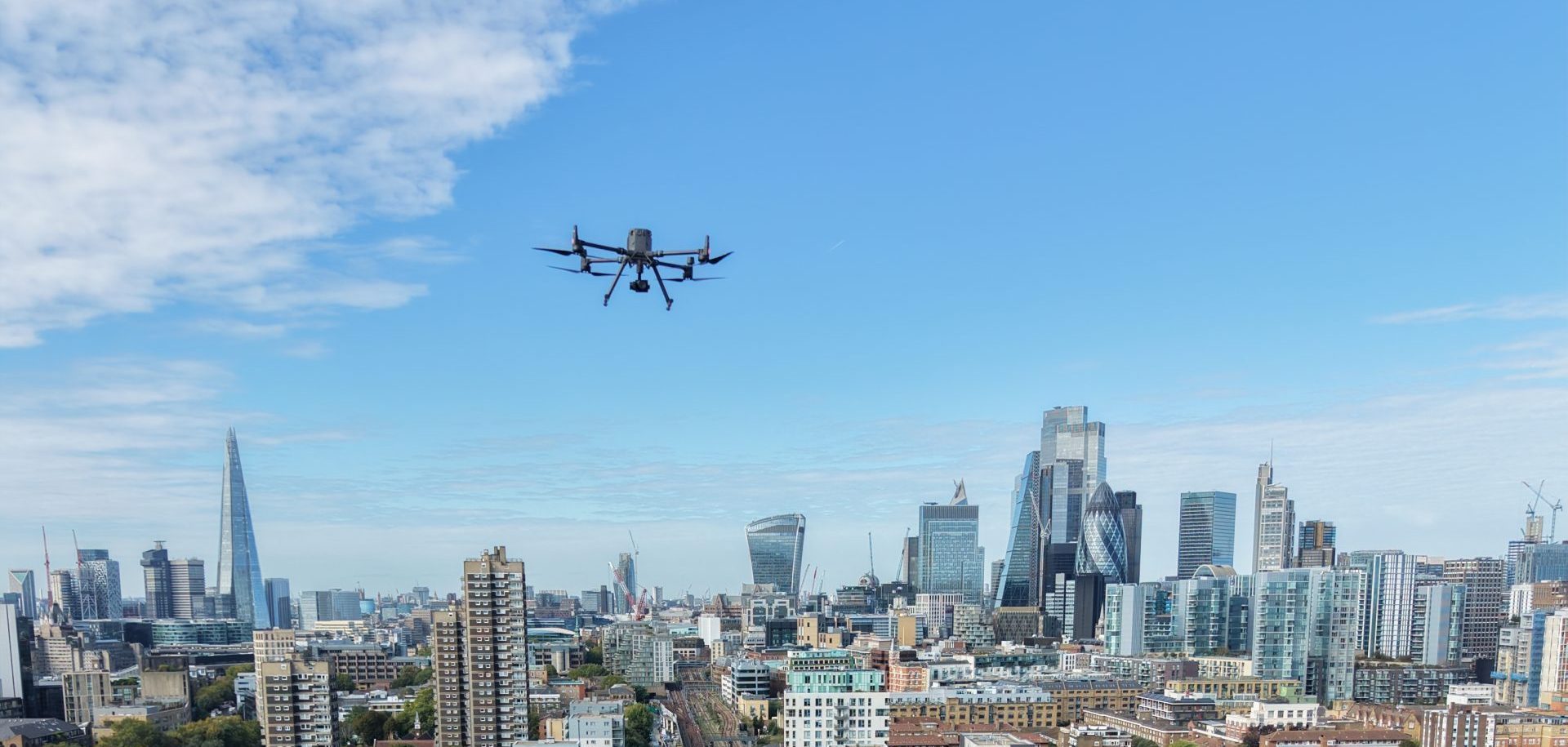
Airspace – An Emergent Issue for GA
Contents
- Editorial
- Emergent Airspace Safety Issue for General Aviation
- Subscribe to CHIRP FEEDBACK
- MAVIS - Met Office Aeronautical Visualisation Service
- Safety Sense 03 - Winter Flying
- Get 5% discount at Pooleys Flight Equipment through CHIRP
- Guidance from the CAA based on CHIRP reports received
- ILAHFFT - The day that the holes of the Swiss Cheese lined up for me!
- GA1401 - Poor airmanship of student pilot observed by more experienced pilot
- GA1402 - Paraglider and light aircraft in close proximity
- GA1409 - Intentional GPS jamming/spoofing
- GA1410 - Communication
William Dean
Air Transport Programme Manager
New CHIRP Director Aviation
Nicky Smith, CHIRP Director Aviation, departed at the end of December last year to pursue other exciting opportunities and we know that whatever she chooses to get involved in will only add to her impressive aviation career to date. Nicky provided strong leadership and direction to our activities throughout her time with the CHIRP aviation team and will be greatly missed. All of us thank her for the hard work and dedication she put into the role.
Nicky’s replacement has been confirmed as Richard Harrison, who joins the CHIRP aviation team in April 2026, and the next edition of FEEDBACK will provide an introduction to Rich, detailing his extensive leadership background in aviation.
William Dean, Interim General Aviation Programme Manager
Emergent Airspace Safety Issue for General Aviation
Below is based on the CHIRP Editorial in Drone/UAS FEEDBACK Edition 15 – Short Notice Temporary Danger Areas “TDA’s” – CHIRP – regarding an issue we in the CHIRP aviation team feel is worthy of publication to the wider general aviation community.
Some providers of “first responder” drone aviation services, such as national police organisations, have decided quite rightly that drones are very useful in recording visual information in time critical situations. The earlier a drone is dispatched to the scene of an incident, the more complete the information it will be able to record. However, to do this effectively the drones will need to be operated Beyond Visual Line of Sight (BVLOS), and sometimes at an instant’s notice, from wherever the drone is based. It is clear that first responder operators will not know in advance where and when they are going to fly such BVLOS operations and there is currently no mechanism to pre-warn other air users of the intended flight.
Detect and Avoid technology is immature and not yet approved and an Uncrewed Traffic Management capability does not yet exist. As a result, the CAA has decided to use Temporary Danger Areas (TDA) around the intended area where an emergency responder bases their drone activities – thereby creating so called “Drone in a Box” (DIAB) operations.
Numerous sites have been identified as potential locations where a DIAB would be beneficial to police forces. It is understood that such drone flights will be classified as “State Flights” and therefore have additional regulatory protections to operate in airspace potentially occupied by GA traffic that have no information regarding the intended flight path. CHIRP feels, as a minimum, that publishing contact details to be used by those requiring access to any of these sites would be very helpful, along with details of how deconfliction will work in practice. It would also be useful if there was some clarity on whether approval to enter the TDA can be granted by the first responder or ATC.
The obvious danger for general aviation is that GA pilots will be unaware of a very last-minute NOTAM being published imposing a TDA, or indeed a TDA being imposed when a GA flight is already underway, and in the same piece of airspace as a DIAB TDA. Height restrictions for drones of 400 feet AGL may not apply to ‘’State Flights’’ on urgent, fast paced, operations which reduces planned safety margins of shared airspace protocols.
As a final point it is also worth mentioning that GPS jamming is increasingly being used to reinforce a TDA. New Year celebrations in central London saw three separate TDAs being imposed including one for GPS jamming, all of which intersected – certainly interesting times are ahead!
Share with CHIRP
Have you had an incident or a near miss? Could CHIRP help or offer advice on a safety concern? Perhaps you’ve experienced or observed something with a human factors angle that you think the wider aviation community could learn from. Why not share it with CHIRP?
Every report helps raise awareness of safety issues, highlights emerging trends and shares valuable lessons with others. Report by report, we can all contribute to making aviation safer – as our strapline says:
“You report it, we help sort it.”
Reporting to CHIRP is simple and quick using either our website portal or the CHIRP App (scan the relevant QR code or search for ‘CHIRP Aviation’, but watch out for the birdsong apps!). The portal presents a series of fields for you to complete, but not every field is mandatory – just tell us as much as you can. The more detail you provide, the more effectively we can help.
Although you’ll be asked for an email address to access the system (to screen out bots and spam), your personal information is held securely within CHIRP’s independent systems and is never shared outside the organisation. Importantly, nothing that could identify a reporter is included in any report we progress or publish. We liaise with you at every stage and no information is passed on without your express consent.
So rather than ‘fly and forget’, please consider working with CHIRP to help make the skies safer for everyone. However, it’s important to note that reporting to CHIRP is not a substitute for submitting a Mandatory Occurrence Report (MOR) when required, for example, when there has been a significant risk to safety, or an event that could have endangered the aircraft, its occupants, or others. MORs should be submitted via the CAA’s ECCAIRS 2 portal.

Subscribe to CHIRP FEEDBACK
The fact that you’re reading this means you already know about CHIRP General Aviation FEEDBACK? In case you don’t receive our emails with links to new editions, as well as our sister Air Transport, Drone/UAS and Cabin Crew versions, please use the subscribe option, which can be found at the bottom of our website https://chirp.co.uk/aviation/subscribe/. Through this link you will soon have the option to request paper copies of GA FEEDBACK too. Alternatively, email us at mail@chirp.co.uk with your name, address and number of copies required, and we’ll add you to our mailing list.

MAVIS - Met Office Aeronautical Visualisation Service
The Met Office is developing a new visualisation system for aeronautical users.
This service is now operational and in beta testing. We encourage you to sign-up and explore the features available. You can see what is upcoming here, and what has been recently released here
Sign-up via mavis.metoffice.gov.uk
PLEASE NOTE: this product is not feature complete, new elements are being added regularly, based on user feedback.
Safety Sense 03 - Winter Flying
This leaflet is intended to provide guidance on common winter issues in GA flying such as weather systems, aircraft preparation, operations on contaminated surfaces and flight in icing conditions. https://www.caa.co.uk/publication/download/12642
Get 5% discount at Pooleys Flight Equipment through CHIRP
Pooleys have kindly agreed to support CHIRP’s fund-raising activities by allocating us a discount code on their website shop. Enter the code ‘Chirp’ (case sensitive) at the appropriate point at the payment stage to get 5% discount and generate some commission for CHIRP. Sadly, this doesn’t apply to the purchase of Bose headsets, but everything else qualifies. If you do use Pooleys for your purchases, or know other people who do, please do share the code. The more the code is circulated, the more it is used and the greater the commission generated to help CHIRP build its resources to do more.

Guidance from the CAA based on CHIRP reports received
CHIRP received two separate reports recently from reporters who were concerned that PPL holders that they were aware of were conducting activities outside of permitted activities according to current regulations. The reports we received were not Whistleblowing reports but were aimed at obtaining clarification from CHIRP on the rules that applied in the specific cases they reported on.
In order that FEEDBACK readers can learn from these enquiries the CAA GA unit was consulted and CHIRP received the following guidance relating to the two situations outlined in the reports received.
The guidance below is intended to be a summary and relate to the subject areas concerned. Even though every effort has been made to be concise and accurate, if readers are still uncertain of how regulation affects their operations, we recommend that the CAA website and other CAA recommended sources are consulted for the latest information.
Reporter’s concern: PPL holders flying parachutists for payment:
CAP660 Version 5, 20 March 2020, sets out the minimum standards for parachuting operations which are considered to be commercial operations unless the specific arrangements satisfy requirements for a derogation in Article 6 of the Air Operations Regulations.
Parachute dropping performed either by a training organisation, having its principal place of business in the United Kingdom and referred to in Article 10a of Regulation (EU) No 1178/2011, or by an organisation created with the aim of promoting aerial sport or leisure aviation, can perform such flights on the condition that the aircraft is operated by the organisation on the basis of ownership or dry lease, that the flight does not generate profits distributed outside of the organisation, and that whenever non-members of the organisation are involved, such flights represent only a marginal activity of the organisation.
A PPL(A) can conduct parachuting flights but must not receive remuneration for their services as a pilot.
Reporter’s concern: PPL holders charging passengers for flights.
CAP 1653 (Edition 3, August 2025): Introductory Flights, Trial Lessons and Air Experience Flights may only be offered by a Declared Training Organisation (DTO) or Approved Training Organisation (ATO).
Trial Lessons and Air Experience Flights must be flown by a Flight Instructor (FI) with the relevant rating — FI(A) for aeroplanes or FI(M) for microlights.
These flights can be performed by a PPL holder (with the appropriate FI rating) and get paid for doing so.
PPL holders may also conduct Introductory Flights, however they may not personally receive any remuneration or valuable consideration for doing so.
PPL holders may also conduct cost-sharing flights (non-commercial, not for profit), under UK Air Navigation Order (ANO) 2016, Article 13. Cost-shared flights are by private individuals, where the conditions of NCO.GEN.102 are satisfied and permitted on condition that the only remuneration or other valuable consideration given or promised for the flight to the pilot by the passengers is a contribution towards the direct costs of the flight which would otherwise be payable by the pilot in command.
CAA recent guidance on:
Cost sharing flights | UK Civil Aviation Authority
CAP 2285: Illegal Public Transport Flights leaflet | UK Civil Aviation Authority
I Learnt About Human Factors From That
The day that the holes of the Swiss Cheese lined up for me!
Thank you to our CHIRP GA FEEDBACK reader who agreed we could use their ILAHFFT so that others may learn from their experiences on this day…
When this incident happened, I didn’t realise that all the holes lined up perfectly and it was only after some time that I discovered that it was absolutely preventable at each and every stage. That is why we must never be complacent with Threat and Error Management. How about this story to prove my point.
The weather had been poor for some time, and I was desperate to fly – anywhere. My flying buddy was on holiday, but I woke up one morning with sun shining through the bedroom window. Great! I can go flying at last. Even after 1000 hours, I still find it exciting to fly, but I am always a little bit anxious especially when I’m on my own. That’s a healthy sign….yes?
Where shall I fly to? I know! An airfield that I have never been to and I know it has lots of training going on plus special arrival and departure rules. In addition, it is very close to the London CTR and lays to the west of my home airfield. A good challenge for me after not flying for some time. Shall we say this is hole number one?
I had plugged the route into the iPad and kept checking the weather. There were some non-flyable areas to the west, but they were only slowly creeping towards the east so I should be OK, but I knew I had to keep an eye out for them developing quicker. Shall we say this was hole number two?
I arrived at the airfield and removed the cover and did the aircraft checks. Plenty of fuel for my short trip and everything else was good. My aircraft is parked within a row of three and opposite my row is a line of club aircraft. It’s always a concern that when taxying between all these aircraft, that my wing tips avoid hitting one of them. While I was doing my checks, a low wing Piper taxied in and parked at the end of my line. I thought what a silly place to park as it restricted the width of the taxiway. However, as my aircraft is a high wing, I could put it over the cowling of the Piper as its propeller had stopped on the horizontal. The pilot got out and went into the clubhouse. Unbeknown to me, rather than staying there for a bite to eat etc, he had come in as part of his cross-country training. Shall we say this is hole number three?
I pulled my aircraft out of the line into the taxiway between the rows of aircraft. Just as I did this, an instructor came out with a pupil and told me that I had parked in front of his aircraft. I told him that I would not be long starting up and as soon as I had, I would taxy away from his aircraft. I got in my aircraft and hurried through the checks and started the engine. So now I’m a bit flustered to hurry up and also on my mind was the complications of my destination airfield. Shall we say this is hole number four?
With the engine running fine, I started to taxy forward looking out for both my wingtips not to touch the other aircraft. I had just about worked out my taxy line where my starboard wing would go over the cowling of the Piper, when it suddenly started up. Without me realising it, the student had got his logbook signed and was leaving. I had not anticipated that he would be so quick. I suddenly had to change my line to avoid the spinning propeller keeping a careful eye on it when there was a sudden “clonk”. My port wing tip had struck the rudder of a club aircraft. As I stopped, the Piper casually taxied out and away unaware of the disaster I had caused.
I had many chances to stop this from happening but my urge to fly after a long spell of poor weather caused me to overlook the Swiss cheese holes.
Firstly, after a layoff, I should have decided to go to a simple airfield that I had visited many times.
Secondly, I should have gone to a destination to the east to avoid a possible interaction with poor weather.
Thirdly, I should have gone back into the clubhouse to see how long the Piper student was going to be and, if he was going to be some time, to ask him if we could push his aircraft back from the taxiway.
Fourthly, When the instructor informed me that I was in his way, I should have pushed my aircraft to another position and not rushed my checks.
I Learned About Human Factors From That (ILAHFFT)
Reports
GA1401 - Poor airmanship of student pilot observed by more experienced pilot
Initial Report
I have recently had to have words with a student who was about to start his machine in front of the hangar while the doors were open! I was rather perplexed when I asked what he thought he was doing, the reply being rather vague that he wasn’t aware of the damage that could be done by such actions.
I made it very clear that this behaviour was not acceptable and requested he move his machine.
After he had departed, I was further amazed to see that he had just kicked the chocks from under the wheels and left them on the apron.
My main thought is that these actions are really basic airmanship points that just aren’t taught anymore – the airfield is becoming like the roads where everyone thinks that they are the most important and entitled and as long as they are ok then nothing else matters.
CHIRP Comment
There is a fine balance to be struck when deciding how to respond when witnessing was is regarded as ‘’poor airmanship’’ at GA airfields such as described above. More experienced aviators may have seen it all before, and therefore have little patience when seen again, but many of those just starting their aviation careers may not have had the best of starts in terms of opportunities to learn good airmanship practices and habits from others, such as from mentoring, or ample time to discuss matters of airmanship in crew rooms etc. More experienced aviators could use the opportunity to educate and pass on their hard-earned experience, and importantly, doing so by explaining what the hazards are and not simply being critical. That way the less experienced person may just remember what was said!
Key Issues relating to this report
Human Factors Considerations
The following ‘Dirty Dozen’ and Human Factors were a key part of the CHIRP discussions about this report.
Positive factors when learning is prioritised:
- Safety mindset – constructive reflection and learning attitude following the event
- Communication and knowledge sharing – willingness to use personal experience to promote safety awareness among others
- Training application – effective use of incidents and near misses as a teaching point
- Self-awareness – recognition of contributory factors such as lapse, distraction and time pressure
- Defensive behaviours – proactive reinforcement of safe habits around aircraft
GA1402 - Paraglider and light aircraft in close proximity
Initial Report
I am a paraglider pilot. I was flying in good conditions and was trying to gain height above fields at the southern edge of [Location]. I was low and circling slowly in very weak lift. My net ground speed would have been approximately 10 km/h (I was circling slowly and drifting in an approx. 20 km/h wind). Visibility was excellent, with bright sunlight. My wing is bright blue with lime green and pink markings. My helmet is bright orange and my jacket bright blue. On one of my turns, I observed a white and blue single-engine aircraft directly in front of me and within a few seconds flight in terms of distance and heading. I was north of the light aircraft and would have been highly visible given light direction and colours.
I immediately broke out of my turn pattern: I was turning right and continuing would have given significant risk of a mid-air collision on my next turn given my assessment of course and speed.
On my left turn I could see the aircraft at the same height now passing very close by. I did not observe any deviation from course by Piper. I have a FLARM device and was in addition visible on both Open Glider Network (OGN) and PureTrack. I have been shown the PureTrack record by another pilot showing the intersecting trajectories, proximity and heights. [At closest point] I was about 200m away and 48 feet below the Piper. My view on the tracklogs is that a collision was quite likely had I not seen the Piper and immediately deviated from my path. I did wonder if there would have been opportunity see the Piper earlier, but it is hard to see how. Given the speed of the [light aircraft concerned], the low visibility of a small aircraft viewed straight on from the front, the white and blue colour and the fact that they were coming from the S or SSW on a bright day, I am not sure this is realistic.
I felt suitably ‘on the ball’ in terms of awareness of airspace. I had been comfortably flying in proximity to sailplanes at several points in the long flight: they are harder to spot, it is necessary to be very ‘switched on’ to small aircraft on such a flight, and I was also aware of a small helicopter lower down also close to [my location].
I wondered whether the [light aircraft pilot] had been able to see me and whether there are additional practical measures to improve visibility if bright colours, FLARM and trackers aren’t effective.
CHIRP Comment
This report was of great interest to CHIRP as it highlights the ever-present hazard in GA airspace of aircraft airprox events, such as described here by the paraglider pilot.
Of note is that, despite this being an AIRPROX event, the paraglider pilot chose to report to CHIRP and not to the UK Airprox Board (UKAB). The UKAB provides a vital air safety function and CHIRP recommends that all incidents such as this, where a pilot believes safe separation with another air user was compromised are sent firstly to UKAB, and then also to CHIRP if the reporter wishes to do so, particularly if human factors considerations, as is usually the case, were a contributing factor. CHIRP does not have the dedicated resource to investigate loss of safe separation events as does the UKAB, which can utilise many more data sources, such as independent radar traces etc, to corroborate accounts.
From a human factors perspective, the paraglider pilot’s situational awareness and good lookout appear to have averted a very close pass between the two airspace users in accordance with the account provided. Not knowing the situation, as experienced from the light aircraft, means we cannot comment further other than to re-emphasise the importance that all pilots develop and practice a formalised, habitual, look out scan, which includes use of any fitted EC equipment as part of that scan, to improve likelihood of early sighting of other aircraft – including balloons & hang gliders – that are on a steady, collision course with their own aircraft, and in good time to take avoiding action.
Key Issues relating to this report
Human Factors Considerations
The following ‘Dirty Dozen’ and Human Factors were a key part of the CHIRP discussions about this report.
Positive HF elements:
- Safety/learning culture – proactive self-reporting of a flight safety event
- Procedural discipline – situational awareness and look out prioritised
- Composure under pressure – calm handling of the paraglider following unexpected loss of safe separation with another aircraft
GA1409 - Intentional GPS jamming/spoofing
Initial Report
AIC P 141/2025 details intentional GPS jamming and spoofing taking place at Sennybridge. The document details effects up to 80nm from the jamming/spoofing source. GPS is the primary means of navigation for most GA flights, with pilots being advised by the CAA to use it, in conjunction with moving map displays, to prevent airspace infringements etc. Close to Sennybridge was BCN VOR, but this has now been removed, so there is no VOR to use as an alternative navigational aid. Close to Sennybridge is Cardiff airspace, they have an active NOTAM stating they will not offer a service to GA aircraft. Radar assistance is therefore not readily available to aircraft uncertain of their position.
Why is intentional jamming/spoofing of GPS permitted in the above circumstances? It is inherently unsafe.
CHIRP Comment
Very topical report as use of GPS is increasingly used for navigation by very many GA users, and for understandable reasons when all things are going well! Moreover, the CAA continues to encourage the use by GA pilots of Moving Map Devices (MMD) as one of the measures to reduce the incidence of airspace infringements. Since regulatory changes were made in October 2025 the use of MMD can be included in PPL training and may now, for example, form part of PPL skill tests. However, not least because of the vulnerability of the system to interference (planned or otherwise), CAA training and test syllabi still require good knowledge of and demonstrated skill in using conventional navigation techniques.
Our approach to reliance on GNSS in aviation has always been tempered by the fact that the signal in space remains vulnerable to interference such as jamming and spoofing. (Whether periods of military training such as this are promulgated or not). This area within 80nm of Sennybridge ranges is clearly a piece of airspace where GPS navigation is particularly vulnerable to disruption during the scheduled periods of these jamming activities. The reporter therefore provides a timely reminder to ensure that the effective use of other navigation aids and aviation charts for VFR navigation must remain a core part of every GA pilot’s skill set.
Key Issues relating to this report
Human Factors Considerations
The following ‘Dirty Dozen’ and Human Factors were a key part of the CHIRP discussions about this report.
Positive HF elements:
- Safety/learning culture – proactive self-reporting of a flight safety issue for wider awareness
Be wary of:
- Complacency – over dependency on GPS provided navigation in areas and at times when satellite signal/service is unreliable
GA1410 - Communication
Initial Report
Flying with a student pilot in a glider at a joint para/GA and gliding airfield where long established procedures are designed to provide SA and traffic separation, particularly between aircraft and parachutes. Paras and gliders had agreed the day’s para/gliding separation procedure.
Cloud base around 1900′ AGL. At around 1300′ AGL preparing to fly towards and join the circuit (usually started at 800′ AGL), I heard the para-aeroplane call downwind to the runway I had in mind. Immediately I saw/heard a strong FLARM warning and looked up and right as warned. Saw the FLARM equipped para-aeroplane diving at speed out of cloud towards the downwind leg and now ‘very close’, so I turned left to increase separation. Good lesson for the (PPL holding) student glider pilot, somewhat disconcerting to me.
Later arranged to chat with the drop plane pilot. Pushback on that idea from the para operation, but the para pilot was of course happy to chat over a coffee. Discovered he is used to operating in a DZ within a DA, ie where there is no other traffic. ‘Difficult to know where to descend around here – lots of traffic or no-go areas’. No real awareness of gliding activity and not overly familiar with FLARM. On the other hand, it was interesting to learn about the challenges for drop plane pilots in relatively busy class G airspace. My offer to try gliding at my cost turned down.
But here’s the point; the discussion enabled a significant but not safety threatening (detected early enough) situation to be analysed by those involved, and several factors subsequently discussed within the gliding community on site at least (no idea if the same occurred in the para operation).
The final point here is that an individual with significant commercial interest in the para operation, who is not a pilot, is well known for [having] a shout first approach to any safety/risk related issues, including at times [remonstrating] with aeroplane and glider pilots who are about to go flying. Pilots need to be able to discuss and, if possible, resolve flying matters and then provide the facts to commercial or other managers who can in turn objectively consider issues in consultation with others. Shouting and confrontation does not sit well with flight safety and a just culture.
Speaking as an experienced glider and GA aeroplane pilot, the drop plane pilots at the site are generally impressive. [Therefore, my] assuming that all have the same level of local knowledge and local experience [was in hindsight] a mistake.
CHIRP Comment
The reporter is commended for writing a comprehensive report about a ‘’near miss’’ incident, where no accident or harm occurred. We all learn greatly from such reports. The reporter also describes their attempt to discuss the issues with the relevant airfield users and stakeholders, demonstrating an exemplary approach to flight safety – that is, speaking up and resolving safety issues there and then in a respectful yet determined manner.
CHIRP hopes that by publicising this report others will learn from the situation described, particularly if they operate at a similar type of multi-use airfield operation, and also to show how to go about resolving conflicts and ensure all stakeholders are aware of the safety challenges and can make improvements where and when needed.
Key Issues relating to this report
Human Factors Considerations
The following ‘Dirty Dozen’ and Human Factors were a key part of the CHIRP discussions about this report.
Positive HF elements:
- Safety/learning culture – proactive reporting of a “near miss” incident
- Communication – willingness to engage with others directly in order to learn and improve flight safety
Be wary of:
- Lack of awareness – e.g. the description of operations/commercial manager’s knowledge and attitude to air safety