
An independent and confidential
reporting system for the Maritime industry
Staying alert to Risk!
Contents
- Editorial
- M2715 - Stored energy in a towing line causes personal injury
- M2762 - Working aloft unprotected
- M2768 - Operation: Tender launched while under way, resulting in personal injuries
- M2702 - Distractions while anchoring
- M2713 - Superyacht passerelle was used incorrectly
- M2704 - Unauthorised removal of LSA and modifications to the ship’s structure

Adam Parnell
One significant theme which emerges in this edition is the importance of not underestimating risk. This applies to both routine tasks such as washing down, and more complex procedures such as towing, launching tenders or anchoring. Dangers arise constantly in our industry, so only sustained alertness and a willingness to challenge the accepted norms will keep us safe.
Some risks are fairly obvious – it should be clear that working overside without PPE is unsafe, while towing at speed, attempting to launch a tender at high speed, or anchoring with excessive stern way are all clearly hazardous undertakings.
Unfortunately, there are also cases where the dangers might not be so readily observed, and two reports highlight this – in one, the loads during a lifting operation may have been underestimated, and potential corrosion of fittings may not have been noticed, whilst in the other, some modifications were made without regard to the potential effect on stability and the safety of the crew.
Constant vigilance and a willingness to question unsafe procedures are vital tools if we are to achieve our collective ambition of ensuring that all crew members return home safely after every voyage.
Reports
M2715 - Stored energy in a towing line causes personal injury
Initial Report
While the vessel was adrift, a tender was prepared for towing from the swimming platform. The line was connected and, following communication between deck and bridge, the operation proceeded on the understanding that the towing line was correctly rigged. As the vessel moved ahead, tension built in the line, which then fouled on the upper section of a bitt, creating a restriction under load.
The officer approached to clear it and, with the line still under tension, attempted to free it by kicking it. When the line suddenly released, it recoiled violently, striking the officer on the arm and neck and briefly rendering them unconscious.
First aid was provided on board, and the casualty was taken ashore for assessment. No serious injuries were found, and they returned to the vessel later the same day.
The operation proceeded on the assumption that the line was correctly set. The fouling under load, combined with attempts to intervene without first removing tension, increased the risk. This highlights the dangers of working on tensioned lines and the need to pause and make the situation safe before taking action.
CHIRP Comment
This report describes a serious incident involving a tensioned line during a towing-related operation between a superyacht and its tender. There is concern over whether the attachment point used, a mooring bitt on the swimming platform, was structurally suitable or approved for towing loads, and how this was verified.
The operation appears to have proceeded on the assumption that the line was correctly rigged, without a final check after the vessel moved ahead. As the load was applied, the line fouled on the bitt, creating an unsafe condition that was not immediately recognised. Limited planning and weak communication between the bridge and deck teams contributed to the escalation.
A key learning point is the attempt to intervene while the line was under tension. Handling or attempting to free a loaded line exposes personnel to snapback risk. In this case, poor judgement of load and timing led to a sudden release and injury. Even small timing errors during such operations can have serious consequences.
Basic risk controls were missing. A short toolbox talk, clearer communication, or pausing engine power could have reduced the risk.
This incident reinforces the fact that all tensioned lines must be treated as high risk. Equipment suitability and rigging should be positively verified before the load is applied, and operations should be stopped to remove tension before any intervention. Strong communication between bridge and deck teams is essential throughout.
This personal injury incident highlights how quickly routine tasks can escalate when stored energy is involved, and the importance of stopping to reassess before acting.
Key Issues relating to this report
Factors related to this report
Complacency – is evident in that the towing line was correctly rigged without a positive verification once the load was applied. The operation appears to have been treated as routine, reducing vigilance at a critical moment.
Situational Awareness – is reflected in the failure to fully recognise the hazard posed by a tensioned and fouled line, particularly the risks associated with stored energy and snapback zones.
Communication – may have contributed, as although there was contact between bridge and deck, there is no indication that a shared mental model of the developing hazard (fouling under load) was established.
Teamwork/Assertiveness – is suggested by the absence of challenge or pause before intervention, with no evidence of cross-checking or escalation before attempting to clear the line.
Capability – (or insufficient application of training) is indicated in the choice to physically intervene on a tensioned line, contrary to widely taught safe line-handling practices.
Key Takeaways
Regulators – Known risks are not the same as managed risks. This case emphasises that well-known hazards such as snapback and stored energy still occur despite extensive guidance, indicating that current safety messages are not consistently influencing operational behaviour. There is an opportunity to better embed, assess, and reinforce guidance such as MGN 520 across the industry, particularly regarding dynamic risk assessment and intervention thresholds.
Managers (Company / Operators) – Procedures only protect people when they shape real behaviour on deck. The incident indicates a gap between procedures and practice, especially in stopping work when conditions deviate from the plan. Managers should consider how effectively crews are trained and empowered to pause operations, how clearly snapback risks are demonstrated, and whether supervision and onboard culture actively reinforce conservative decision-making in routine tasks.
For Seafarers – If it’s under load, don’t touch it, make it safe first. This event is a reminder that tensioned lines are inherently dangerous and can become lethal without warning. Intervening before removing the load, even with simple actions, can lead to serious consequences. Taking a moment to stop, reassess, and make the situation safe is always the safer option, even under perceived pressure to continue.
M2762 - Working aloft unprotected
Initial Report
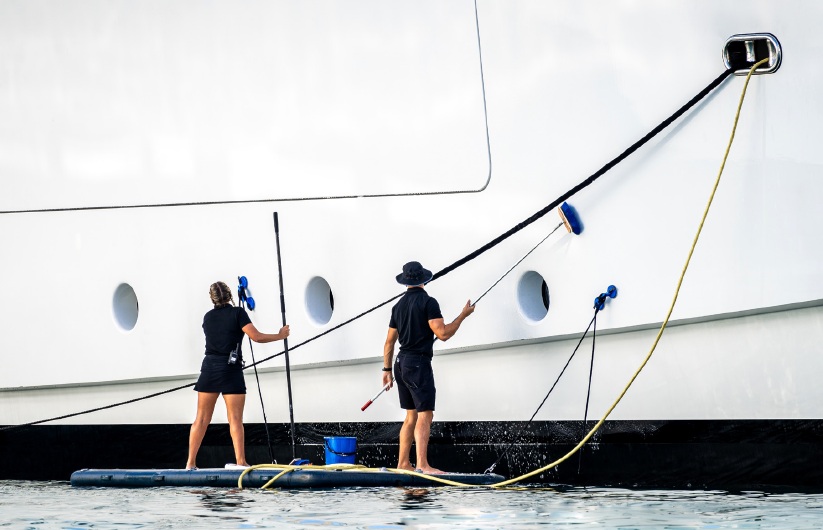
A crew member was washing down the overside port hull on the sundeck without using a harness or attaching to a fixed point. He was also not wearing shoes. Separately, three crew members were on the sundeck performing a washdown, but not overside. Another crew member was washing the aft brow on the sundeck using a harness and an attachment point.
CHIRP Comment
This report highlights a common but significant safety concern: the inconsistent application of established risk controls during routine operations. The fact that one crew member undertaking a similar task was correctly using a harness and attachment point demonstrates that the necessary equipment was available, the procedure was understood, and the task could be carried out safely. The vessel also had an external access plan identifying suitable attachment points for this type of work. These arrangements indicate that the risks had already been recognised, yet the required safeguards were not consistently applied at the point of work.
When safety measures are applied selectively, it often reflects a gradual erosion of standards during routine operations. Tasks such as washdowns can become normalised, leading to the systematic underestimation of risks, particularly when they are perceived as quick or low consequence. However, any work undertaken near exposed edges or over the ship’s side requires rigorous adherence to the external access plan and associated control measures. In the absence of fall protection, suitable attachment arrangements, and effective supervision, risk management becomes dependent on individual judgement, which is neither reliable nor sustainable.
The presence of other crew members in the vicinity, without intervention, suggests that unsafe practices were either not recognised or not challenged. This raises broader concerns about onboard safety culture, particularly about whether individuals feel both responsible for and empowered to speak up when they observe unsafe behaviour. Effective teams maintain shared situational awareness and actively monitor not only their own safety but also the safety of those around them.
There is also a clear gap in supervision. Visible and engaged supervision plays a critical role in reinforcing expectations and addressing deviations in real time. When unsafe practices occur in plain sight, it suggests that supervisory oversight may not have been sufficiently present or actively engaged.
CHIRP is also concerned by indications that working close to exposed edges without appropriate controls may have become normalised. A key lesson identified by contributors is that not all unsafe behaviour is deliberate or reckless. It is important to distinguish between intentional violations and actions that arise when individuals underestimate risk, become task-focused, or follow accepted but unsafe routines. There is a risk in assuming that behaviour which appears unsafe is inherently negligent when it may, in fact, reflect wider cultural or procedural weaknesses.
A further issue relates to the practical difficulties faced by crew members working alone. This case reinforces the need for robust lone-working arrangements, particularly where there is limited supervision or opportunity for peer challenge, and where tasks involve exposure to significant hazards. CHIRP notes with concern the recommendation of a national investigation authority that the company and vessel manager review their permit-to-work arrangements to ensure they are not only correctly issued but also meaningful, clearly understood, and actively used to control risk. The report also highlights the value of collaboration with flag states and industry organisations to strengthen oversight and improve safety standards across the sector.
This case demonstrates that having procedures, plans and equipment in place is only one part of an effective safety system. Their consistent application, supported by active supervision and a culture in which individuals are willing to challenge unsafe practices, remains essential to preventing serious incidents. Consistency, not availability, determines the effectiveness of safety controls.
Key Issues relating to this report
Factors relating to this report
Complacency – Familiarity with the work led to the activity being perceived as a lower risk, and it is unlikely to have been mentioned in any permit to work.
Situational awareness – Working over the side is a hazardous activity, and doing so without any form of PPE indicates a casualness that is manifestly dangerous.
Alerting – Lack of assertiveness, where others present may have noticed the unsafe act but did not speak up- why?
Communications – The nearby crew did not challenge or intervene, indicating a breakdown in shared safety responsibility. Ideally, this should be highlighted at all toolbox talks.
Key Takeaways
Regulators – Regulation is effective only when safe behaviour is consistently visible, not just formally required. This case highlights the importance of reinforcing not just procedural compliance but behavioural consistency. The variability in PPE use for identical tasks suggests that existing guidance may not be sufficiently embedded in day-to-day operations. There is also an opportunity to emphasise the importance of visible supervision during inspections, rather than relying solely on documented procedures.
Managers – A procedure not consistently followed is a system weakness, not a workforce failure. From a management perspective, this report highlights gaps in the consistent application of safety standards. Although procedures and equipment were clearly available, their use was not universal, indicating a disconnect between policy and practice. This suggests a need to strengthen onboard safety culture through active supervision, reinforcement of expectations, and encouragement of speaking-up behaviours. Managers should also consider whether routine tasks are being sufficiently risk-assessed in practice, and whether the crew understand that “routine” does not equate to “low risk.” Ensuring that supervisors actively monitor and correct unsafe behaviours in real time is critical. How is this being achieved?
Seafarers – If you see it and don’t challenge it, you are part of the risk. For seafarers, this event underlines the shared responsibility for safety. The presence of multiple crew members did not prevent an unsafe act, highlighting the importance of challenging unsafe behaviour regardless of rank or familiarity. It also reinforces that PPE and fall protection are essential controls, even for short or routine
tasks. Observing a colleague working safely in the same area demonstrates that the correct approach was known and achievable.
M2768 - Operation: Tender launched while under way, resulting in personal injuries
Initial Report
While sailing off the coast, the crew attempted to launch the vessel’s tender while the yacht was underway at approximately 6 knots. The tender was launched from the schooner rig’s forward boom.
Prior to the launch, the tender launch team prepared the equipment and informed the captain that they were ready. It was understood that the vessel would be slowed before the tender was lowered. The captain subsequently gave the order to proceed. The vessel’s SOP was to launch the tender without a bow line because setting it up was considered too time consuming. The lifting hook used was not a quick‑release type found on commercial shipping.
At the time of launch, the chief officer (CO) and bosun were inside the tender.
When the tender became partially waterborne, the engine did not start in time, and the lifting hook failed to release. This resulted in excessive load remaining on the hoist while the tender was partially waterborne.
The tender then capsized with the engine still running, throwing both crew members into the water.
The abnormal load placed significant strain on the rigging. The boom preventer line failed under load and parted, narrowly missing some of the crew members on deck and posing a serious risk of fatal injury.
Shortly afterwards, the captain identified what had occurred and reduced the vessel’s speed. The bosun and the chief officer were recovered from the water, with one suffering a dislocated knee and the other a fractured ankle. The crew were badly shaken, and the guests were visibly shaken by the incident. Fatalities were narrowly avoided.
CHIRP Comment
This incident highlights a high-risk transfer operation conducted while the vessel was still making way, during which multiple safety barriers were either weakened or absent. The loss of control of the tender, its capsize, and the resulting injuries were not due to a single error but to the interaction of procedural, technical, operational, and human factors. Launching the tender at approximately 6 knots significantly increased dynamic loading and reduced the crew’s ability to recover when the operation did not proceed as planned.
Although there was an assumption that the vessel would be slowed, this was not enforced as a clear go/no-go condition immediately prior to release. The accepted deviation from safe rigging practice, notably the absence of a bow line due to perceived time pressure, removed an important stabilising and recovery control. Time pressure is often self imposed, and there is always an opportunity to stop and reassess an operation when conditions are not as expected.
The SOP in place did not sufficiently address the risks associated with underway launches and was not rigorously applied at the point of execution. The use of a lifting hook without a positive quick-release mechanism introduced additional risk in a dynamic environment and became a critical weakness when the tender engine failed to start. The crew took corrective actions to self-recover, which transferred excessive forces into the boom and rigging, leading to preventable failures and creating a serious snapback hazard that narrowly missed personnel on deck.
The incident also highlights the importance of maintaining effective supervision and challenge during routine operations, particularly where informal workarounds or deviations from procedure have become accepted practice. Professional, deliberate execution of operations should be encouraged, as taking the time to perform tasks safely is often viewed positively and should not be seen as
detrimental to guest service.
The presence of two crew members inside the tender during this high-energy phase significantly increased the severity of the outcome, and both were injured during the capsize and subsequent recovery attempts. Where personnel remain in a tender during launching or recovery operations, this should occur only when the lifting arrangement is specifically certified, tested, and approved for man-riding operations.
The incident also serves as a reminder to review the suitability of lifting hooks and release arrangements used on tenders and rescue craft. Operators should ensure that equipment complies with current industry guidance and applicable regulatory requirements.
Overall, the event demonstrates how assumptions, weak procedural enforcement, equipment limitations and time pressure combined to erode safety margins. It reinforces the need for robust barrier thinking, formalised dynamic risk assessment for underway operations, confirmed vessel speed reduction, proven engine readiness, reliable release systems, effective supervision, and clear authority for any crew member to stop the operation when critical conditions are not met.
Key Issues relating to this report
Factors related to this report
Communication – The lack of communication led to assumption that the vessel would slow without an explicit final confirmation loop. No closed confirmation immediately before launch.
Pressure – Acceptance of “no bow line” due to time pressure. Normalisation of deviation from optimal rigging practice. Once readiness was declared, there was an expectation to proceed with the launch without any checks.
Capability – Underestimation of dynamic loading risks when launching underway at 6 knots. Potential gap in understanding the consequences of non-quick-release systems during partial immersion.
Teamwork – Weak or no challenge function between the launch team and the command decision point. No effective “stop call” escalation at the final stage.
Alerting – No strong intervention when the ideal safety configuration was bypassed.
Local practices – Acceptance that tender launches can be conducted with reduced rigging controls.
Distraction – Multiple concurrent system states (engine start, release, vessel movement) competing for attention.
Key Takeaways
Regulators – If people are inside the load, the system must assume something will go wrong and ensure the people still survive it. There is a clear signal here for tighter expectations around lifting arrangements for crewed transfers, stronger limits on launching while making way, and clearer equipment standards aligned with commercial safety practices, even in superyacht operations. The punchline for regulators is simple: if people are inside the load, the system must assume that something will go wrong and ensure those people still survive.
Managers – When the procedure is shaped by convenience, the sea will eventually expose the shortcomings. The key learning is how normalised efficiency can quietly override risk controls. The decision pathway shows a system in which “saving time” replaced engineered safety margins, ranging from omitting a bow line to accepting a non-quick-release hook and proceeding while underway at excessive speed. The critical weakness is not a single decision, but the accumulation of small design and procedural choices. This is exactly the type of scenario that requires conservative operating rules, clear stop conditions, and an empowered culture of challenge.
Seafarers – If you lose control of one link in a live transfer chain, you do not have time to negotiate the rest. The key takeaway is the importance of recognising when conditions no longer align with the assumptions underlying a plan and stopping the operation. Once the vessel was making way and the tender was partially afloat, the operation had entered a high-energy, low-control state in which timing,
communication, and release mechanisms became critical. In these moments, escalation and stopping the operation are not procedural hesitation; they are hazard control.
M2702 - Distractions while anchoring
Initial Report
The captain was distracted while chatting to the steward during anchoring operations and left the engines in astern after instructing the OOW to lay out the anchor using the windlass. The stress caused the chain to jump off the gypsy, startling the bosun, who was very close to the designated viewing platform for the operation. The captain blamed the bosun, but ECDIS data showed he was making 4 knots astern.
This was written as a near miss and submitted to the safety meeting, but it was rejected for inclusion in the minutes. This happened again at another location when the speed of the vessel was 3 knots astern while paying out the anchor cable using the windlass, the chain jumped, and again the crewmember, a lead deckhand, was blamed.
The reporter resigned from the ship and was summoned to the office to explain the reasons for their resignation. During this process, the reporter presented objective evidence—including ECDIS records, logbook entries, and witness statements—demonstrating that the master was responsible for poor and dangerous anchoring procedures. Based on the evidence provided, the master was dismissed from the company. Reflecting on the experience, the reporter noted: “It was a very hard time, and had I been more junior, my report may not have been accepted, or the matter may have gone unreported.”
The reporter suggests that the review of these examples could lead to a discussion about how to report serious safety breaches when the usual channels don’t work, or people are worried about losing their jobs or future opportunities if they do report.
CHIRP Comment
This report highlights several important human factors issues: distraction during a critical operation, unsafe anchoring practices, misuse of authority, and failures in the onboard reporting culture.
Anchoring operations require full concentration from both the bridge and forecastle teams. The reported astern speeds while paying out cable using the windlass created excessive load on the anchor chain, causing it to jump on the gypsy and placing personnel at serious risk of injury. The fact that the event occurred twice suggests that unsafe practices had become normalised.
The captain’s distraction during the operation was concerning, but the subsequent response was equally significant. Blaming deck personnel rather than examining the operational factors prevented proper learning from the first incident and increased the likelihood of recurrence. The rejection of the near-miss report from the safety meeting minutes is also troubling, as safety reporting systems only
work when concerns are openly discussed, recorded, and acted upon.
CHIRP commends the reporter for preserving objective evidence, including ECDIS data, logbook entries, and witness accounts. This is particularly important where there is a strong authority gradient, as more junior crew members may feel unable to challenge senior officers or report unsafe behaviour. CHIRP also commends the management company for its thorough approach to investigating this incident.
This case also highlights the importance of alternative reporting routes when onboard processes fail. Seafarers must have confidence that serious safety concerns can be raised through company, confidential, or regulatory channels without fear of retaliation. The usual route is via the designated person ashore (DPA). The DPA should make themselves known to the ship’s staff and actively encourage reports of concern to be addressed directly to them if onboard reporting procedures are not working. The DPA should not remain in a passive role within the company but should become more actively involved by visiting the vessels whenever possible. The hiring and vetting of senior officers should ensure that appropriate due diligence is conducted to assess their willingness to report safety concerns, especially those raised by the crew during safety meetings and at other times.
The key lesson is that effective safety culture depends not only on procedures but also on creating an environment where concerns can be raised, investigated fairly, and learned from before someone gets hurt.
Key Issues relating to this report
Human Factors related to this report
Situational awareness – Failure to understand what is happening, what has changed, or what may happen next. Frequently caused by distractions, complacency and inadequate experience.
Distractions – Loss of attention during safety-critical tasks. Alerting – Failure to speak up or challenge unsafe acts, conditions, or assumptions.
Culture – Poor safety culture, weak reporting culture, fear of blame, or normalisation of unsafe behaviour.
Teamwork – Poor coordination, lack of shared mental models, weak supervision, or ineffective cooperation.
Capability – Possible that the dynamic forces were not properly understood by the master.
Key Takeaways
Regulators – Most maritime accidents aren’t single “human errors” but systemic failures shaped by culture, workload, supervision and fatigue. Effective regulation must assess reporting culture and non‑technical skills, not just technical compliance. The MLC has created a recognised reporting pathway, but it is too often not used due to fear of losing your job and intimidation. This must not be allowed to prevail.
Managers & Companies – Safety is set ashore before it’s tested at sea. Decisions on crewing, schedules and reporting culture shape risk onboard. When shortcuts and fatigue are normalised, incidents follow. Psychological safety and practical human factors training matter.
Seafarers – Speak up early — small concerns prevent big accidents. Routine tasks become risky with distraction, fatigue or complacency. Managing awareness, challenging assumptions and supporting each other are key defences at sea.
M2713 - Superyacht passerelle was used incorrectly
Initial Report
A hydraulically operated passerelle failed under load while being used to transfer a 60 kg engine component onboard. Although the task had been risk-assessed and conducted using a controlled method to minimise load, the passerelle collapsed when the attending crew member stepped onto it midway through the operation. The individual avoided injury, and the load was recovered from the water.
Subsequent inspection identified structural failure of the aluminium securing eyes, likely influenced by material design and possible corrosion between dissimilar metals. The incident highlighted limitations in load assumptions when combining static and dynamic forces, and the importance of structural integrity checks beyond routine testing.
Operations were suspended until a temporary access solution was installed. Enhanced inspection regimes, revised handling procedures, and stricter controls on passerelle loading have since been introduced.
CHIRP Comment
This report describes a serious near-miss involving the failure of a hydraulically operated passerelle during a lifting operation. Although the task was risk assessed and controlled, the event demonstrates a gap between planned load assumptions and the real-world effects of dynamic loading.
A key learning point is that equipment rated for a specific static load may respond very differently when additional forces are introduced through movement, impact, or personnel stepping onto a structure during an operation. These dynamic interactions can significantly exceed the original design loading and may not be accounted for during planning and risk assessment.
The failure of the aluminium securing eyes also raises questions around material selection and long-term integrity at the design stage of a vessel’s life, particularly where corrosion can occur between dissimilar metals. Such degradation may not be readily visible during routine inspections, highlighting the need to consider the material’s long-term suitability for critical load-bearing.
There is also value in reflecting on whether operational procedures fully prevent personnel from stepping onto or interacting with equipment; if this is likely, then greater redundancy in the strength of the passerelle and its fixing points should be added. Even well-controlled operations can inadvertently introduce additional loading paths when human movement overlaps with lifting activity.
The immediate suspension of operations and introduction of revised controls is an appropriate response. However, this event suggests a broader need to review design assumptions against actual operational conditions, the adequacy of inspection regimes for critical components, and the way dynamic effects are accounted for in risk assessments.
While no injury occurred, the circumstances underscore an important point: control measures must account not only for planned actions but also for unplanned interactions among people, equipment, and movement during operations. For lifting operations, the correct lifting equipment must be used, even if this incurs additional cost and time – the passerelle is not the appropriate equipment to use.
Key Issues relating to this report
Factors related to this report
Situational awareness – Assessing the risks can sometimes overlook the latent issues associated with design.
Complacency/Overconfidence – Familiarity with the equipment can often prevent a close-up inspection of critical strength points and prevent searching questions about the equipment’s working limits, particularly when dynamic loading is applied, which can be hard to quantify.
Design – The underlying vulnerabilities were limited structural strength, a gradual loss of strength due to wear and chemical reactions in the fittings, an inability to properly inspect the connections, and a lack of understanding of combined-loading hazards.
Key Takeaways
Regulators – “Compliance with routine testing requirements may not reveal hidden structural vulnerabilities created by operational use and environmental exposure.” For regulators, this incident highlights the need for inspection standards and certification regimes to better reflect real‑world operating conditions, including operational loading, environmental degradation, and mixed‑material corrosion risks. Regulators should encourage operators to move beyond purely compliance‑based testing and consider how equipment is actually used in service—particularly where personnel access systems may also be subject to lifting or transfer loads. There is also value in promoting clearer guidance on dynamic loading effects, alongside more targeted inspection of critical attachment points and interfaces that may be vulnerable to progressive or hidden degradation.
Managers – “Safe systems of work must reflect operational reality, not simply the intended limits described in procedures or equipment documentation.” For managers and operators, the occurrence highlights the need for risk assessments to consider interactions among people, equipment, and changing operational conditions, rather than focusing solely on nominal load figures. Enhanced inspection regimes, revised transfer procedures, and stricter loading controls introduced after the event demonstrate a positive safety response and a willingness to strengthen organisational resilience. “Safe systems of work must reflect operational reality, not simply the intended limits described in procedures or equipment documentation.”
Seafarers – “A routine task can quickly become unsafe when hidden equipment degradation combines with everyday operational actions.” For seafarers, the event serves as a reminder that seemingly minor changes in loading conditions can have significant consequences when the equipment’s condition or design margins are not fully understood. Situational awareness during lifting and transfer operations remains critical, particularly where personnel movement may unintentionally increase dynamic loads. The outcome also reinforces the importance of reporting concerns about equipment condition, unusual movement, corrosion, or uncertainty regarding operational limits before tasks proceed.
M2704 - Unauthorised removal of LSA and modifications to the ship’s structure
Initial Report
A master joined a motor yacht for a short handover period while the regular master was away on a short break. During the onboard induction, several arrangements were identified that could adversely affect vessel safety.
The first concern related to the rescue boat (RB), which had been removed from its operational position to create storage space for an additional personal watercraft requested for guest use. The RB had been taken off its chocks, deflated, and packed away. It was reported that the RB was normally reinstated for inspections and surveys, but there were no plans to reinstall it for an upcoming coastal voyage.
A second concern involved two spaces that had originally been designated as partially open or “wet” spaces as part of the vessel’s certified tonnage arrangement. These spaces incorporated ventilation or freeing arrangements that prevented them from being considered fully enclosed areas.
To increase usable storage capacity and protect equipment from water ingress, removable panels had reportedly been fitted to close off sections of these openings during normal operations. It was understood that this arrangement had been used routinely throughout the season.
The reporting master was concerned that enclosing spaces not originally intended to be fully watertight could affect drainage arrangements, bilge capacity, and, potentially, the vessel’s stability if water accumulated. No evidence was seen that the implications of these modifications had been formally assessed or reflected in the vessel’s stability information.
The concerns were raised with the senior officer on board, who explained that the arrangements had been implemented in accordance with previous instructions. The reporter later discussed the matter internally within their management company; however, as the vessel was not under their management, they were uncertain whether any further action had been taken.
CHIRP Comment
The reported arrangements raise serious concerns regarding both compliance with statutory safety requirements and the management of operational risk onboard.
The rescue boat forms part of the vessel’s approved Life-Saving Appliances (LSA) inventory and is essential for recovery, rescue, and emergency response. Removing it from operational readiness to create additional guest storage space significantly reduces the vessel’s emergency capability. Of particular concern is the indication that the rescue boat was reinstated only for inspections and surveys. This reflects the “normalisation of deviance”, in which deviations from established standards gradually become routine. Left unchallenged, such practices can significantly erode safety margins over time.
This behaviour suggests that safety equipment may have been treated as a compliance exercise rather than an operational necessity. CHIRP reminds operators that lifesaving appliances must remain available, ready for immediate use, and maintained in accordance with statutory and manufacturer requirements at all times, unless formally exempted by the Flag Administration.
The reported modifications to partially open or “wet” spaces also raise significant concerns. These spaces are often integral to the vessel’s approved tonnage and stability arrangements, with ventilation, drainage, and freeing arrangements carefully considered during design approval. Installing removable panels to enclose such spaces, even temporarily, may alter drainage characteristics, introduce the risk of downflooding, or allow water to accumulate in unintended areas. Any modification affecting watertight integrity, stability assumptions, or tonnage arrangements requires formal assessment, approval where necessary, and appropriate documentation.
This report highlights a broader cultural issue sometimes encountered in the yacht sector, where commercial, aesthetic, or guest-service priorities can erode established safety margins. Temporary or seasonal alterations may become normalised without proper risk assessment or oversight. Senior personnel should remain alert to any “drift” from the vessel’s approved configuration, particularly where operational convenience overrides original safety intent.
Finally, this case reinforces a common misconception that passing a survey guarantees ongoing safety. Inspections are sampling exercises, not assurances. Safe operation depends on continuous adherence to procedures, effective oversight, and a strong onboard safety culture. CHIRP encourages masters and crew to report concerns whenever they identify arrangements that are inconsistent with statutory requirements or safe operating practices. Early intervention and open reporting are essential to prevent unsafe conditions from becoming embedded as accepted routine.
Key Issues relating to this report
Factors related to this report
Local practice (norms) – Unsafe practices became accepted routine.
Alerting (assertiveness) – Personnel may have felt unable to challenge established practices.
Pressure – Guest expectations and operational convenience likely influenced decision-making.
Capability – It is possible that the implications for stability were not fully recognised.
Teamwork – Safety concerns were not collectively owned, which may indicate a poor safety culture.
Key Takeaways
Regulators – “Survey compliance is meaningless if the vessel only becomes compliant for the survey.” Vessels should be assessed in their true operational condition rather than only in their inspection configuration. Temporary removals of lifesaving appliances or removable structural modifications can significantly alter risk, stability, and emergency preparedness. Regulators should also continue encouraging confidential reporting pathways so that relief crew and visiting personnel can raise concerns without fear of repercussions.
Managers and Operators – “Convenience-driven changes must never outrank safety-critical design assumptions.” Any modification affecting lifesaving appliances, drainage arrangements, stability assumptions, or tonnage certification requires formal risk assessment and technical review. Informal workarounds introduced for convenience or guest operations can gradually bypass the safety management system and become normalised. Leadership decisions, including decisions not to act, strongly influence onboard safety culture.
Seafarers – “Fresh eyes often see risks that familiar eyes have stopped noticing.” If an arrangement appears inconsistent with vessel certification, emergency preparedness, or safe operating practice, it should be questioned and reported. Long-term exposure to unsafe practices can normalise risk and reduce challenge within teams. Relief personnel and new joiners often identify hazards that established crews may no longer recognise.